

Chemicals and Hazardous Materials
In modern industry, the use of chemicals defined as hazardous materials has increased over the years, and today they are found in every business—ranging from the cleaning agents we use to raw materials and process catalysts.
But how do we know which chemicals to use? How should they be stored? Are there different instructions for different chemicals? This article aims to answer all these questions.
First, we must define what hazardous materials are.
Hazardous Materials (HazMat) are substances classified as having a harmful effect on living organisms, flora, or the environment.
These substances are assigned a 4-digit number between 0003-3376. These numbers are not categorical in their sequence; rather, they serve as a serial number that can be identified in the UN lists.
The UN also published a document called the "Orange Book," which details regulations for the transport and handling of these materials. In this book, hazardous materials are characterized according to 4 criteria:
- Substance name
- UN number
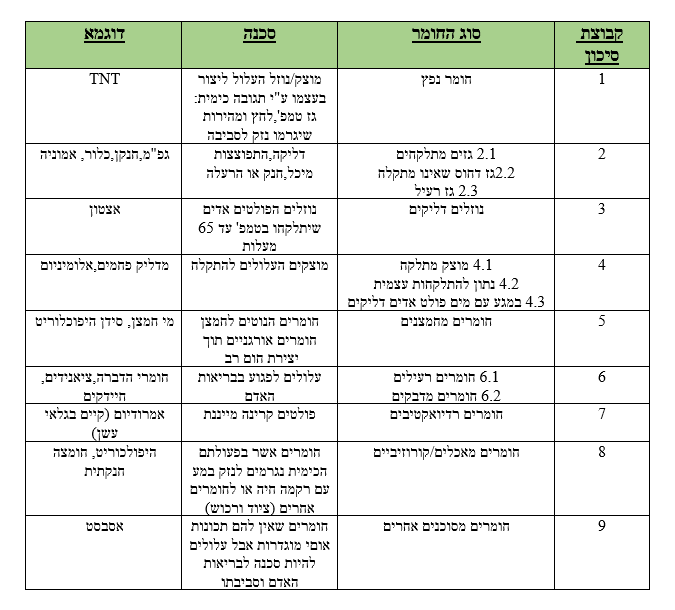
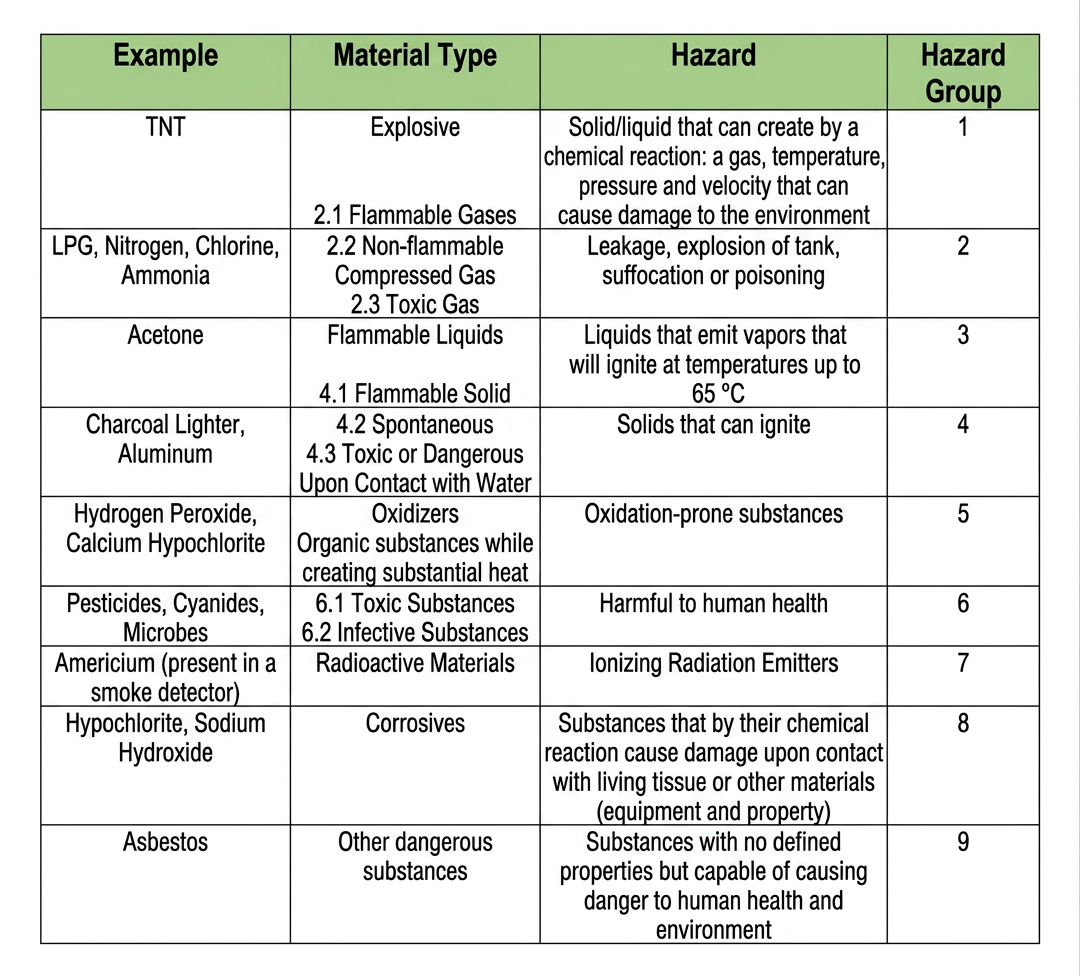
- Hazard class to which the substance belongs (explosive, gas, flammable solid, flammable liquid, oxidizer, reducer, toxic, radioactive, corrosive, other)
- Risk level during transport—dictating the type, structure, and strength of the substance's packaging (I-High, II-Medium, III-Low) For example:
Sodium Cyanide: UN number 1689, belongs to hazard class 6, risk level I.
Hazard Class Catalog-
In Israel, these materials are defined under the Hazardous Substances Law-5753-1993, which defines a closed list of 250 different groups of substances.
Regulation regarding the handling of hazardous materials (transport, conveyance, production, use, maintenance, packaging, import, trade) is conducted under the Hazardous Substances Law.
Under this law, it is determined that anyone dealing with hazardous materials is required to hold a Poisons Permit.
A Poisons Permit is a document containing details regarding the type and quantity of poisons the dealer is allowed to hold, as well as conditions for the manner of handling and storage permitted under the dealer's specific circumstances.
A Poisons Permit is granted to a specific person and not to the business where they are employed. This means that all legal matters regarding the handling of poisons rest upon the permit holder.
A Poisons Permit includes:
- A list of poisons and the quantities permitted to be held.
- Specific instructions regarding the storage of poisons (use of bunds/secondary containment for liquid poisons, signage, stacking/storage levels, separation instructions, etc.).
- Specific instructions regarding measures for handling a HazMat incident (absorbent materials, personal protective equipment, emergency drills, instructions regarding electricity and grounding, etc.).
- The obligation to report in case of a HazMat incident and to take initial treatment measures.